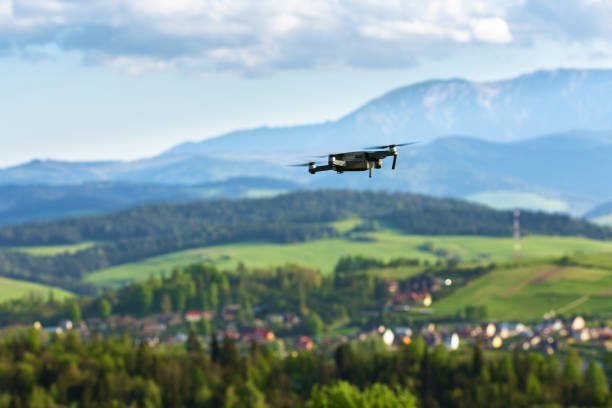
Anduril Thunder Autonomous Attack Rotorcraft: Comprehensive Review of Next-Generation Military Uncrewed Systems and Software-Defined Defense
Pioneering the future of software-defined military aviation and autonomous defense architecture, the Anduril Thunder emerges as a revolutionary Group 5 autonomous attack rotorcraft designed to operate seamlessly alongside crewed military helicopters or as part of larger uncrewed formations. Engineered to address modern contested battlefield demands, the Thunder integrates advanced distributed AI coordination, modular payload flexibility, and high-speed cruise performance to execute complex tactical missions in environments previously considered too hazardous for human aviators. From a technical and mechanical design standpoint, the aircraft features a high-performance rotorcraft airframe engineered around an open-systems software architecture powered by Anduril's Lattice operating system. This enables decentralized swarm intelligence, autonomous threat identification, and real-time path planning without relying on constant satellite communication links or manual ground piloting. The modular internal and external payload bays support a vast array of mission configurations, ranging from electronic warfare jamming suites and reconnaissance sensors to precision-guided munitions, allowing field commanders to adapt the aircraft rapidly to shifting combat requirements. The global defense marketplace supporting uncrewed combat systems is experiencing an unprecedented paradigm shift toward autonomous, software-defined hardware platforms that offer rapid upgradeability and lower lifecycle costs compared to traditional crewed military aircraft. Defense market analysts evaluate Anduril's approach as a vital strategic disruption that ensures military forces maintain technological superiority against evolving electronic warfare and air defense threats. in parallel with rigorous military flight testing protocols, software engineering teams maintain stringent cybersecurity protocols to protect operational telemetry against sophisticated cyber attacks and signal jamming. Developer dedication to open architecture standards allows third-party defense contractors to integrate new sensor algorithms seamlessly. Compliance officers verify that all export control laws and international defense contracting guidelines are met without exception. For defense agencies seeking uncompromised tactical autonomy and flexible combat capabilities, integrating the Anduril Thunder into operational doctrines delivers a decisive strategic edge. Industry experts consistently recommend conducting comprehensive electronic warfare simulation tests before deploying autonomous rotorcraft into heavily defended airspace corridors. (Disclaimer: For reference only)